

New York City presents one of the toughest driving environments in the United States, with over 2 million registered vehicles and some of the most congested streets in the country. Studies show that drivers in NYC spend nearly 100 hours per year in traffic, which increases wear on critical vehicle components. Many drivers begin searching for answers when issues arise, such as why horn stopped working in steering wheel, but the root causes often go deeper than a single malfunction. Steering wheel controls, including audio, cruise, and horn systems, fail more often here due to constant use and environmental stress. Understanding why this happens helps drivers prevent costly repairs and maintain safety.
The Unique Stress of New York Traffic
New York traffic is not just heavy; it is relentless and unpredictable. Drivers constantly stop, start, turn, and adjust controls, which increases mechanical strain. Unlike highway driving, city traffic demands frequent interaction with steering wheel buttons and switches. As a result, components wear out faster than in less demanding environments. Moreover, tight streets and aggressive driving patterns force drivers to rely heavily on horn and control functions. This continuous use accelerates internal degradation.
Stop-and-Go Driving Impact
Stop-and-go traffic creates repeated stress cycles on steering wheel systems. Every time a driver accelerates or brakes, they often adjust controls simultaneously. Over time, this repeated motion loosens electrical connections within the steering column. Additionally, constant steering adjustments increase friction in internal components. These small stresses add up quickly in dense urban traffic. Eventually, they lead to intermittent or complete failure.
High Driver Interaction Frequency
City drivers interact with their steering wheel controls far more often than suburban drivers. They adjust volume, answer calls, and use navigation controls frequently. This repeated use wears down buttons and internal circuits faster. Furthermore, frequent horn use in busy streets adds additional strain. Unlike occasional use, constant activation shortens component lifespan. Therefore, urban driving directly increases failure rates.
Environmental Factors in NYC
New York’s environment plays a major role in accelerating steering wheel control issues. The combination of humidity, temperature shifts, and pollution affects vehicle electronics significantly. These external conditions weaken sensitive components over time. Drivers often overlook environmental damage because it occurs gradually. However, it contributes heavily to system failures. Understanding these factors helps explain why issues are more common in NYC.
Humidity and Moisture Exposure
New York experiences high humidity levels, especially during summer months. Moisture can seep into steering wheel assemblies and affect electrical contacts. Over time, this leads to corrosion and reduced conductivity. Additionally, condensation forms inside vehicles during temperature changes. This moisture damages wiring and connectors slowly but steadily. As a result, controls may become unresponsive.
Winter Conditions and Road Salt
Winter introduces another layer of stress through road salt and freezing temperatures. Salt particles can enter the vehicle interior and settle in small crevices. These particles accelerate corrosion in electrical components. Furthermore, cold weather makes materials contract, which stresses wiring connections. When temperatures rise again, expansion causes further strain. This cycle weakens components over time.
Air Pollution and Dust
New York’s dense traffic produces high levels of airborne pollutants. Dust and debris can enter the steering column through small gaps. These particles interfere with mechanical and electrical parts. Over time, buildup reduces responsiveness and causes malfunction. Additionally, pollutants can degrade protective coatings on components. This makes systems more vulnerable to damage.
Design Complexity of Modern Steering Wheels
Modern vehicles include advanced steering wheel controls that rely on complex electronics. While these features improve convenience, they also increase failure points. More components mean more opportunities for malfunction. In high-stress environments like NYC, these systems struggle to maintain reliability. Therefore, complexity becomes a disadvantage under heavy usage.
Integration with Multiple Systems
Steering wheel controls connect to various systems such as infotainment, cruise control, and safety features. A single issue can disrupt multiple functions simultaneously. This interconnected design makes troubleshooting more difficult. Additionally, failures in one system can cascade into others. Drivers may experience multiple issues at once. This increases repair complexity and cost.
Use of Clock Spring Mechanism
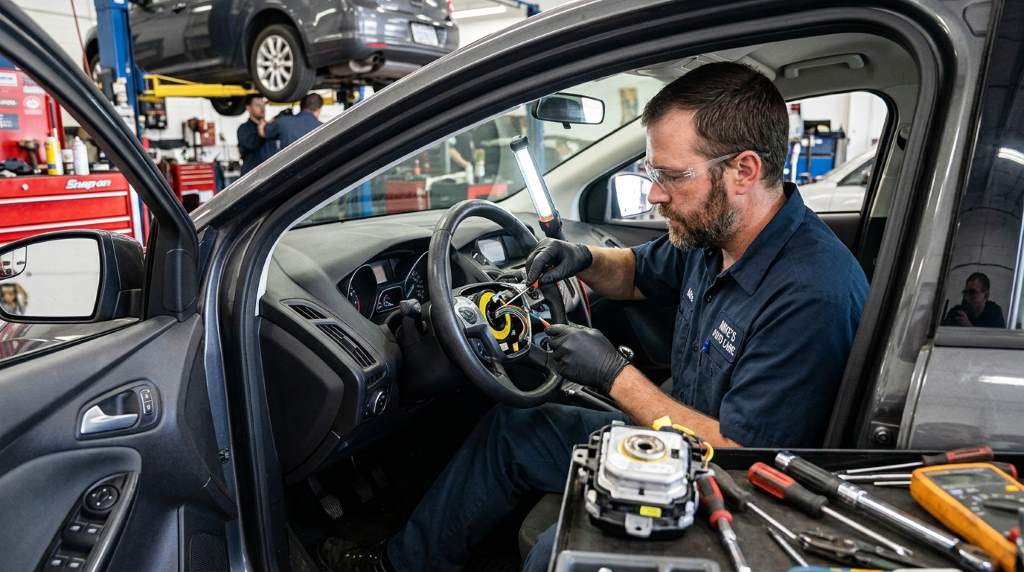
The clock spring is a critical component that allows electrical connections while the wheel rotates. In NYC traffic, constant turning accelerates wear on this part. Over time, the internal ribbon cable can crack or break. This leads to loss of connection for controls and airbags. Frequent turning in tight city streets increases stress on this mechanism. As a result, it fails sooner than expected.
Common Signs of Steering Wheel Control Failure
Recognizing early warning signs helps prevent complete system failure. Many drivers ignore small issues until they become serious problems. However, early detection can save time and money. Understanding these signs allows for timely maintenance. It also improves overall driving safety.
Intermittent Button Response
Buttons may work inconsistently before failing completely. This often indicates worn contacts or loose connections. Drivers may notice delayed responses or missed inputs. Over time, the issue becomes more frequent. Eventually, controls stop working altogether. Addressing this early can prevent further damage.
Non-Functional Horn
A failing horn is one of the most noticeable issues. In NYC, frequent horn use increases the likelihood of failure. This problem often relates to the clock spring or wiring issues. Drivers may experience partial or complete loss of function. Since the horn is a safety feature, this issue requires immediate attention. Ignoring it can lead to dangerous situations.
Dashboard Warning Lights
Modern vehicles display warning lights when systems malfunction. Steering wheel control issues may trigger airbag or electronic warnings. These alerts indicate deeper problems within the system. Drivers should not ignore these signals. Prompt inspection can prevent more serious failures. It also ensures vehicle safety systems remain functional.
Practical Ways to Prevent Failures
Preventive maintenance plays a key role in extending the life of steering wheel controls. While NYC conditions are harsh, drivers can take steps to reduce wear. Simple habits can make a significant difference. Consistent care helps maintain system reliability. It also reduces long-term repair costs.
Reduce Excessive Use
Limiting unnecessary use of controls can slow wear. For example, avoid repeatedly pressing buttons when not needed. Use controls gently rather than forcefully. Additionally, minimize excessive horn use when possible. These small changes reduce strain on components. Over time, they help preserve functionality.
Regular Interior Cleaning
Keeping the vehicle interior clean prevents dust and debris buildup. Use a soft cloth to clean steering wheel surfaces regularly. Avoid using harsh chemicals that may damage components. Additionally, ensure vents and gaps remain free of debris. Clean environments reduce the risk of internal damage. This simple step improves longevity.
Schedule Routine Inspections
Regular vehicle inspections help identify issues early. Mechanics can check wiring, connectors, and the clock spring. Early detection prevents minor issues from becoming major problems. Additionally, routine checks ensure all systems function properly. This proactive approach saves money in the long run. It also enhances driving safety.
Repair and Replacement Considerations
When steering wheel controls fail, repair options vary depending on the issue. Some problems require simple fixes, while others need full replacement. Understanding these options helps drivers make informed decisions. Cost and complexity depend on the specific failure. Therefore, proper diagnosis is essential.
Minor Electrical Repairs
Loose connections or minor wiring issues can often be repaired بسهولة. These fixes are usually affordable and quick. Technicians can restore functionality without replacing major components. However, accurate diagnosis is crucial. Misidentifying the issue can lead to unnecessary costs. Therefore, professional inspection is recommended.
Clock Spring Replacement
Replacing the clock spring is a common repair for steering wheel failures. This component is essential for maintaining electrical connections. While replacement costs can be moderate, it resolves multiple issues at once. Additionally, it restores functionality to several controls. This makes it a practical solution for many problems. Proper installation ensures long-term reliability.
Full Steering Wheel Replacement
In severe cases, the entire steering wheel assembly may need replacement. This is more expensive but sometimes necessary. Damage to multiple components can make repair impractical. Additionally, advanced systems may require complete replacement. While costly, this option ensures full functionality. It also restores safety features.
Related:
In-Depth Motorhome Reviews | Features, Pros & Cons
Essential Motorhome Repairs And Maintenance Guide
Why NYC Drivers Face Higher Costs
Repair costs in New York are typically higher than in other areas. Labor rates are elevated due to demand and location. Additionally, frequent failures increase overall expenses for drivers. Parts may also cost more due to supply chain factors. These combined factors make maintenance more expensive. Therefore, prevention becomes even more important.
Conclusion
Steering wheel control failures occur more often in New York due to heavy traffic, environmental conditions, and high usage frequency. These factors place constant stress on complex vehicle systems, leading to faster wear and breakdown. However, drivers can reduce risks by adopting better habits, maintaining cleanliness, and scheduling regular inspections. Taking proactive steps not only saves money but also improves safety on busy city streets. If you notice early warning signs, act quickly and consult a professional mechanic. Addressing issues early prevents costly repairs and ensures your vehicle remains reliable in demanding conditions.
FAQs
Why do steering wheel controls stop working suddenly?
Sudden failure usually results from a broken clock spring or loose wiring connection.
Does NYC traffic really affect car electronics?
Yes, constant use and environmental stress accelerate wear on electronic components.
How much does it cost to fix steering wheel controls?
Costs vary but typically range from $150 to $800 depending on the issue.
Can I drive with faulty steering wheel controls?
Yes, but it is not safe, especially if the horn or airbag system is affected.
How often should I check steering wheel systems?
It is best to inspect them during routine maintenance every 6–12 months.