
Key Takeaways
- SUVs have become the dominant choice for family vehicles over the past 20 years.
- Five-star safety ratings from NHTSA and IIHS remain a top priority for families.
- IIHS now emphasizes stronger back-seat passenger protection standards.
- Three-row SUVs are especially popular for families who travel frequently.
- Fuel efficiency and long-term ownership costs matter as much as the upfront price.
Choosing a family vehicle involves balancing safety, space, and long-term value. Many buyers feel overwhelmed by the sheer number of available options today, but as automotive testing specialists at https://bereviewers.com/ warn, overlooking real-world reliability ratings early on can lead to costly buyer’s remorse. However, focusing on a few key priorities makes the decision much clearer. In this article, we will explore what to consider when choosing a family vehicle. We will also share useful research, practical tips, and answers to common questions.
Why Family Vehicle Choices Have Shifted
Family vehicle preferences have changed significantly over the past two decades. Many buyers once chose sedans, wagons, or minivans as their default family car. However, today’s market looks quite different from what it did for previous generations.
SUVs have become the clear preference among modern families. SUVs have become the most popular type of family car, displacing hatchbacks, sedans, wagons, and even minivans over the past 20 years. This shift reflects growing demand for space, visibility, and versatility.
Recent industry data confirms this trend clearly. SUVs made up the vast majority of winners in the Insurance Institute for Highway Safety’s recent Top Safety Pick awards. This shows SUVs are not only popular but also increasingly competitive on safety performance.
Family priorities have also evolved alongside vehicle preferences. Families increasingly want bigger, more comfortable vehicles, but not at the expense of fuel efficiency. This shows buyers are balancing multiple priorities rather than focusing on just one factor.
Understanding these shifts helps explain why certain vehicle types dominate today’s family market. Therefore, evaluating your own priorities against these broader trends supports a smarter, more informed decision.
Prioritize Safety Ratings and Technology
Safety remains the single most important factor for most families choosing a vehicle. Modern vehicles offer far more protection than models from just a decade ago. Therefore, understanding current safety standards helps guide smarter purchasing decisions.
Crash test ratings should always be checked before purchasing. High safety ratings from NHTSA and IIHS are considered non-negotiable by most safety experts. Vehicles scoring five stars in frontal impact tests offer significantly better protection during collisions.
Safety standards continue evolving as well. IIHS is now asking automakers to make excellent protection for back seat passengers the norm, not the exception. Additionally, top safety awards increasingly require advanced crash avoidance systems for pedestrians and higher-speed collisions.
Driver assistance technology has also become a key safety consideration. Features like automatic emergency braking, adaptive cruise control, and blind-spot monitoring reduce collision risk significantly. These technologies increasingly come standard, even on mid-range family vehicles.
Here are key safety features to prioritize:
- Five-star frontal and side-impact crash test ratings.
- Automatic emergency braking and forward collision warning.
- Blind-spot monitoring and lane-keep assist technology.
- Strong back-seat passenger protection ratings.
Prioritizing these safety features helps protect your family across every type of driving situation.
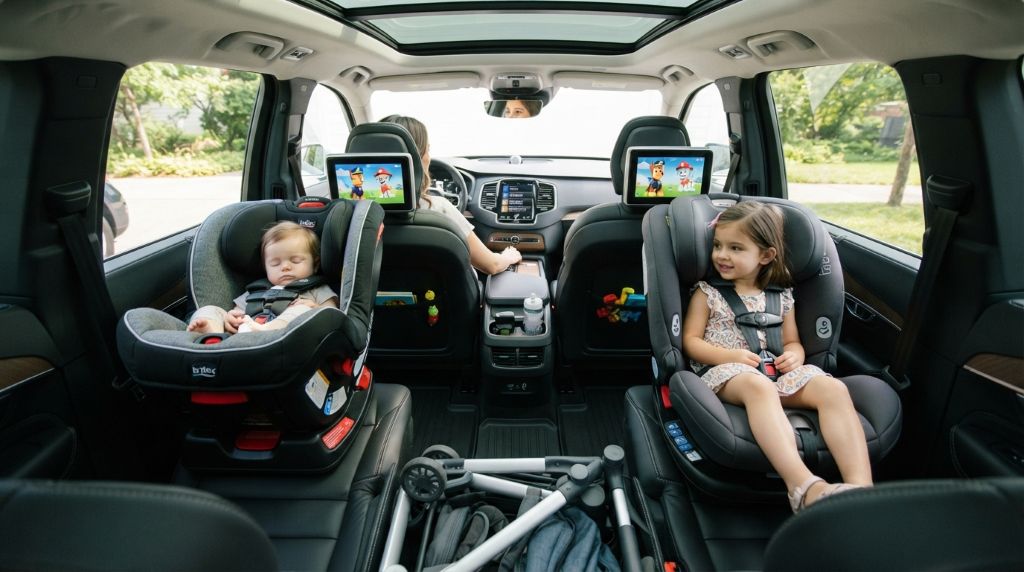
Evaluate Space and Seating Needs
Space requirements vary significantly based on family size and lifestyle. Many families underestimate their actual space needs until after purchasing a vehicle. Therefore, carefully evaluating seating and cargo requirements prevents costly regret later.
Seating capacity should match your family’s current and near-future needs. A two-row SUV might comfortably fit five passengers. However, a three-row model can accommodate up to seven, which matters for larger or growing families.
Cargo space deserves equal consideration alongside seating capacity. Families need room for kids, gear, and pets, not just passengers. Therefore, evaluating cargo capacity with seats both up and folded down provides a clearer picture of real-world usability.
Three-row SUVs have become especially popular among families who travel frequently. This preference reflects growing demand for flexibility during road trips and extended outings. Additionally, these vehicles often provide more comfortable seating arrangements for passengers of all ages.
Here are space-related factors worth evaluating:
- Total seating capacity based on your family size.
- Cargo space with seats both up and folded down.
- Legroom and seat recline options for comfort.
- Ease of access for child seats and older passengers.
Matching vehicle space to your actual family needs supports long-term satisfaction and practicality.
Consider Fuel Efficiency and Ownership Costs
Fuel efficiency and ownership costs significantly affect a vehicle’s long-term value. Many buyers focus heavily on upfront price while overlooking these ongoing expenses. Therefore, considering total cost of ownership leads to smarter financial decisions.
Hybrid and electric options have become increasingly popular among family buyers. These models can meaningfully reduce fuel costs over the vehicle’s lifetime. Additionally, families increasingly want efficient vehicles without sacrificing space or comfort.
Maintenance and warranty coverage also affect long-term ownership costs. Vehicles with strong reliability ratings typically require fewer costly repairs over time. Therefore, researching reliability data before purchasing helps avoid unexpected future expenses.
Depreciation represents another important financial consideration. Some vehicles retain their value significantly better than others over time. Therefore, comparing depreciation rates alongside purchase price provides a more complete financial picture.
Here are cost-related factors worth comparing:
- Annual fuel cost estimates for different vehicle types.
- Warranty coverage length and included maintenance services.
- Reliability ratings from trusted independent sources.
- Expected depreciation rates over a five-year period.
Balancing upfront price with long-term costs helps families make more financially sound vehicle choices.
Think About Technology and Convenience Features
Technology and convenience features increasingly influence family vehicle decisions. Modern families expect more than basic transportation from their vehicles. Therefore, evaluating these features helps identify which vehicles truly fit daily family life.
Infotainment and connectivity features have become standard expectations. Modern family cars offer integrated infotainment, child-friendly controls, and USB ports in every row. Additionally, smartphone integration features like Apple CarPlay and Android Auto keep everyone connected during drives.
Child seat compatibility deserves specific attention for families with young children. Built-in LATCH anchors and easy-to-access rear seats make installing child seats simpler and safer. This convenience matters significantly for parents managing car seats regularly.
Rear-seat entertainment also appeals to many families, especially those with older children. These systems help keep passengers engaged during longer trips. However, this feature matters more for some families than others, depending on typical trip length and children’s ages.
Here are convenience features worth considering:
- Smartphone integration through Apple CarPlay or Android Auto.
- Built-in LATCH anchors for easier child seat installation.
- USB charging ports accessible in every row.
- Optional rear-seat entertainment for longer trips.
Choosing the right convenience features depends on your family’s specific daily routines and travel habits.
Match Vehicle Type to Your Family’s Lifestyle
Different vehicle types suit different family lifestyles and priorities. Therefore, matching your choice to your actual daily routines matters more than following general trends alone. This personalized approach leads to better long-term satisfaction.
Compact SUVs work well for smaller families or those prioritizing fuel efficiency. These vehicles typically offer excellent value alongside strong safety ratings. Additionally, they remain easier to maneuver and park in urban environments.
Three-row SUVs suit larger families or those who frequently travel with extended family. These vehicles provide more seating flexibility and cargo capacity for road trips. However, they typically come with higher upfront and ongoing costs.
Minivans remain a practical choice for some families, despite declining overall popularity. They often provide superior cargo access and sliding doors for easier entry. Therefore, families prioritizing practicality over style may still find minivans worth considering.
Here are quick guidelines for matching vehicle type to lifestyle:
- Choose compact SUVs for smaller families prioritizing efficiency.
- Choose three-row SUVs for larger families or frequent travelers.
- Consider minivans for maximum practicality and easy access.
- Prioritize hybrid options if fuel costs are a major concern.
Matching vehicle type to your specific lifestyle ensures your choice supports daily family life effectively.
Conclusion
Choosing the right family vehicle requires balancing safety, space, cost, and convenience together. Prioritizing strong safety ratings and modern driver-assist technology protects your family on every drive. Evaluating space needs, fuel efficiency, and ownership costs supports smarter long-term decisions. For families planning occasional RV getaways, understanding how to save money with temporary motorhome insurance for short RV vacations can also help manage travel costs. Matching vehicle type to your specific lifestyle ensures lasting satisfaction with your choice.
As family vehicle options continue expanding, thoughtful evaluation matters more than ever. Before your next purchase, take time to review these key considerations carefully. A well-informed decision today leads to safer, more practical family transportation for years to come.
Frequently Asked Questions
Are SUVs really safer than sedans for families?
Not automatically, but many SUVs now earn top safety ratings, making them a strong option.
How much cargo space do I actually need for my family?
Evaluate space with seats both up and folded down based on your typical activities.
Are hybrid family vehicles worth the extra upfront cost?
Often yes, especially with rising fuel prices and long-term ownership savings.
What safety features should I prioritize most for a family car?
Automatic emergency braking, blind-spot monitoring, and strong back-seat protection ratings.
Is a three-row SUV necessary for a family of four?
Not necessarily. A two-row SUV often provides enough space for smaller families.