
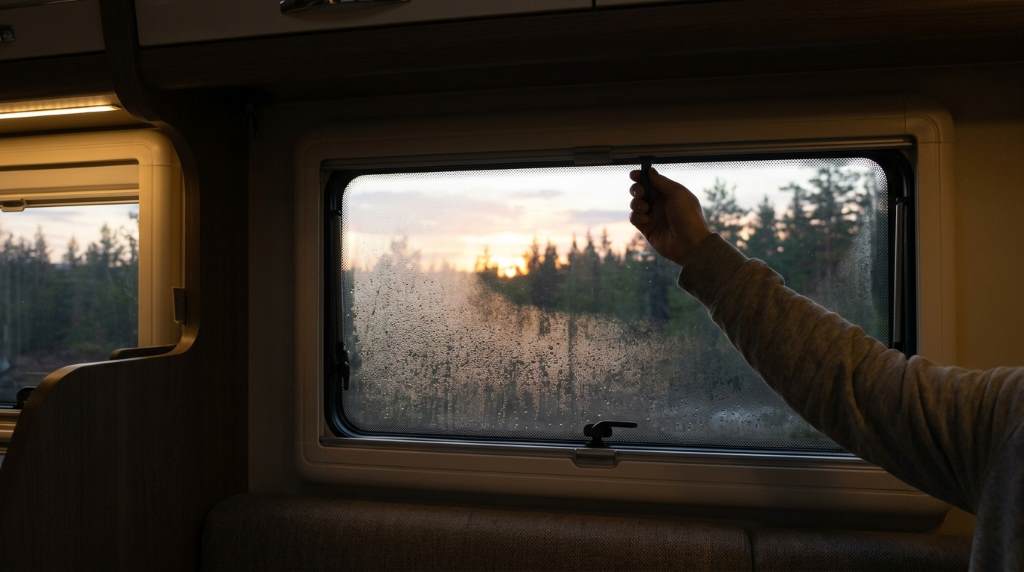
To prevent condensation inside a motorhome overnight, control moisture, improve airflow, and keep interior surfaces warmer. A sleeping adult can release roughly 200 to 400 milliliters of water overnight through breathing and perspiration. Condensation becomes increasingly likely when indoor relative humidity approaches 60 percent. Therefore, ventilation and humidity control should work together throughout the night.
Understand Why Overnight Condensation Happens
Condensation forms when warm, moisture-filled air touches a colder surface inside your motorhome. Windows, metal frames, exterior walls, roof panels, and poorly insulated corners usually become the first collection points.
Overnight conditions make this problem worse because occupants continuously add moisture while heating systems warm the air. Meanwhile, outside temperatures often fall sharply after sunset, cooling the motorhome’s interior surfaces.
Cooking, showering, wet clothing, and damp bedding can increase the moisture load before bedtime. Consequently, a motorhome can begin the night with already elevated humidity.
Air temperature alone does not explain condensation. Instead, the key issue involves the relationship between moisture content, surface temperature, and the dew point.
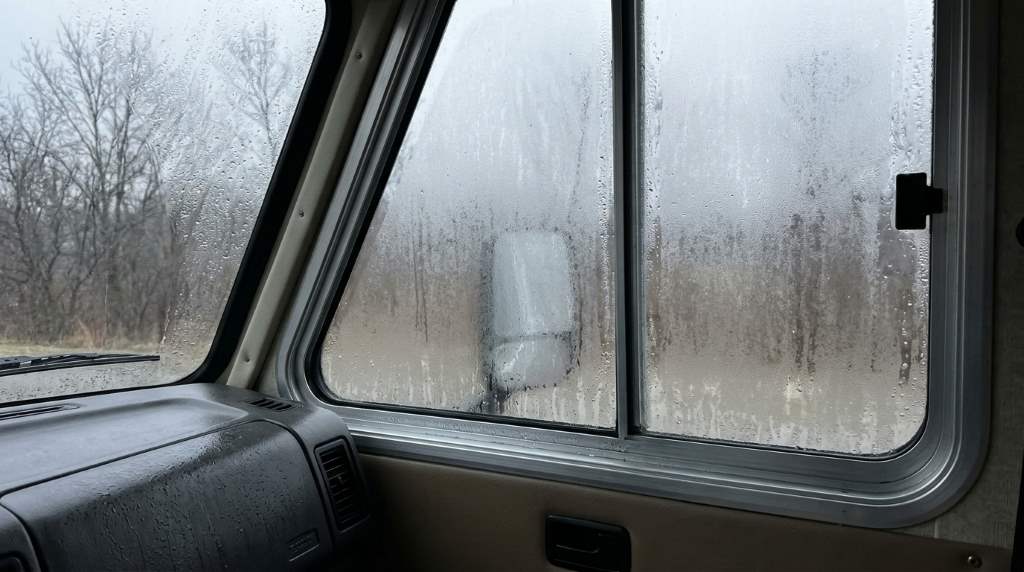
What Is the Dew Point?
The dew point represents the temperature where air can no longer hold its existing moisture. When a window or wall reaches that temperature, water vapor changes into visible liquid droplets.
Therefore, lowering indoor humidity reduces the amount of moisture available for condensation. Raising surface temperatures also helps prevent those surfaces from reaching the dew point.
Improve Airflow Before You Go to Bed
Start with ventilation because trapped humid air creates ideal conditions for overnight condensation. Open designated roof vents slightly, then maintain controlled airflow without creating excessive drafts.
Use your motorhome’s built-in ventilation features rather than relying entirely on cracked windows. If your ventilation system includes adjustable settings, choose a steady low airflow overnight.
Airflow also matters around sleeping areas, where breathing creates concentrated moisture. Keep curtains, bedding, and personal belongings from blocking vents or restricting circulation.
For better use of limited interior space, consider these space-saving living hacks. Better organization can prevent belongings from blocking important ventilation paths.
Use Roof Vents Strategically
Roof vents allow warm, humid air to escape naturally because moisture-laden air tends to rise. Keep one vent slightly open when weather conditions and your ventilation system permit it.
However, never rely on ventilation alone during heavy rain or severe weather. Adjust openings according to outside conditions and your motorhome manufacturer’s guidance.
Create Cross-Ventilation
Cross-ventilation works best when air enters through one opening and exits through another. Even a small difference in pressure can help move humid air outside.
Keep openings modest during cold weather to balance moisture control with heating efficiency. The goal involves continuous moisture removal, not a large overnight draft.
Control Indoor Humidity While Sleeping
A portable hygrometer gives you a simple way to monitor moisture instead of guessing. Place it near the sleeping area, away from direct heat and ventilation outlets.
Aim to keep indoor relative humidity around 30 to 50 percent during colder nights. If readings repeatedly approach 60 percent, increase ventilation and reduce moisture sources before bedtime.
For accurate readings, allow the hygrometer to stabilize after entering the motorhome. Sudden temperature changes can temporarily distort humidity measurements.
Use a Small Dehumidifier Carefully
A compact dehumidifier can help when ventilation alone cannot control humidity. Choose a unit designed for the available electrical supply and interior space.
However, avoid placing it where spilled water could damage flooring, wiring, or furniture. Empty its collection container regularly unless the unit supports safe continuous drainage.
Desiccant moisture absorbers can supplement ventilation in cupboards and enclosed compartments. They work best as secondary protection rather than your primary condensation solution.
Keep Cold Surfaces From Becoming Condensation Traps
Cold surfaces attract condensation because they reach the dew point faster than surrounding materials. Therefore, insulation and controlled heating can significantly reduce overnight moisture accumulation.
Insulated window coverings can reduce heat loss through glass during cold nights. However, leave enough ventilation around windows to prevent moisture from becoming trapped behind coverings.
Thermal curtains, insulated blinds, and removable window inserts can help stabilize interior surface temperatures. Choose products that fit securely without blocking essential ventilation routes.
Inspect corners, storage compartments, and exterior-facing cabinets for unusually cold surfaces. Persistent condensation in one location may indicate insufficient insulation or an underlying moisture problem.
Protect Windows From Heavy Moisture
Windows often show condensation first because glass loses heat quickly after sunset. Wipe accumulated moisture before bedtime if the surfaces already feel damp.
Use an absorbent microfiber cloth for morning cleanup instead of allowing water to remain on frames. Persistent moisture around window seals can eventually encourage mold and material deterioration.
Keep curtains slightly separated from wet glass when practical. This arrangement allows air to circulate and helps moisture escape rather than remain trapped.
Manage Heat Without Overheating the Interior
Consistent heating usually works better than repeatedly allowing the interior to become very cold. Stable temperatures reduce sudden changes that encourage moisture to settle on cold surfaces.
Set your heating system to maintain a comfortable baseline rather than creating excessive heat before sleep. Extremely warm air can hold more moisture, which later condenses when surfaces cool.
Keep heaters unobstructed and follow the manufacturer’s clearance requirements. Never cover heaters with clothing, bedding, towels, or other materials.
Fuel-burning heaters require particular attention because combustion can introduce additional moisture. Use only equipment approved for your motorhome and follow its ventilation requirements carefully.
Do Not Depend on Heat Alone
Heating raises air temperature, but it does not remove moisture from the motorhome. Therefore, heating without ventilation can simply postpone condensation until colder surfaces eventually reach the dew point.
The most effective approach combines moderate heating with controlled ventilation. This combination keeps surfaces warmer while continuously removing moisture-laden air.
Reduce Moisture Before Bedtime
The easiest condensation problem to solve involves moisture you never introduce. Complete moisture-producing activities before bedtime whenever your schedule and conditions allow.
Take showers earlier and ventilate the bathroom immediately afterward. Keep bathroom doors closed during showers so humid air does not spread throughout the sleeping area.
Likewise, avoid drying wet clothing inside the motorhome overnight. If indoor drying becomes unavoidable, maximize ventilation and use a dedicated drying area away from sleeping spaces.
Cooking also creates significant moisture, especially when boiling water or preparing steam-heavy meals. Use the kitchen ventilation system during cooking and continue ventilation afterward.
Handle Wet Gear Properly
Wet coats, towels, shoes, and outdoor equipment can release moisture for several hours. Store them in a ventilated area when possible, preferably away from sleeping quarters.
Do not place damp clothing against exterior walls or cold windows. Those surfaces can become localized condensation points while moisture slowly evaporates.
Dry wet gear outside whenever weather conditions permit. Removing one persistent moisture source can make a noticeable difference inside a compact motorhome.
Change Sleeping Habits That Increase Moisture
Two people sleeping inside a compact motorhome can create substantially more moisture than one occupant. Therefore, ventilation requirements increase with occupancy.
Keep bedding breathable and avoid completely sealing sleeping areas with thick curtains. A small air gap can help moisture move toward available ventilation points.
Wet towels should never remain beside the bed overnight. Hang them where airflow can remove moisture rather than allowing them to release water into stagnant air.
Plants can also contribute moisture through natural transpiration. Limiting indoor plants during cold weather can reduce unnecessary humidity inside a small living space.
Protect the Sleeping Area
Keep mattresses slightly separated from cold exterior walls when the layout allows it. Air circulation behind bedding helps prevent hidden moisture from accumulating against the wall.
Check underneath mattresses and cushions regularly, especially after cold nights. Hidden dampness can persist longer than visible window condensation and create unpleasant odors.
Ventilated mattress supports can improve airflow beneath bedding. They also reduce the chance of moisture becoming trapped between cushions and solid surfaces.
Check Your Motorhome for Moisture Problems
Condensation sometimes indicates a broader moisture problem rather than normal overnight humidity. Inspect roof seams, window seals, plumbing connections, and exterior storage compartments regularly.
Look for staining, bubbling finishes, soft panels, musty odors, or discoloration around corners. These signs can indicate water intrusion that requires attention beyond ordinary ventilation.
Regular maintenance also supports safer ownership and fewer unpleasant surprises. Review your RV insurance and registration tips while maintaining your motorhome’s essential records.
Inspect Seals and Drainage
Damaged seals can allow exterior water to enter during rain, creating persistent dampness inside walls. Inspect sealant around windows, roof fixtures, vents, and other penetrations.
Also check gutters, drainage channels, and roof runoff paths for blockages. Water that cannot drain properly may collect around vulnerable seams and eventually enter the interior.
Address suspected leaks promptly rather than masking odors with air fresheners. Moisture trapped inside structural materials can become much harder to remove over time.
Use a Simple Overnight Condensation Routine
A consistent bedtime routine makes condensation prevention easier because it removes guesswork. Complete the same short sequence before turning in each night.
- Check the hygrometer and note the current humidity level.
- Ventilate the bathroom after any shower or washing activity.
- Remove wet clothing, towels, and outdoor gear from sleeping areas.
- Open approved roof vents or windows slightly when conditions permit.
- Keep ventilation paths clear around beds, cabinets, and heaters.
- Maintain steady overnight heating rather than large temperature swings.
- Check windows and cold corners for existing moisture before sleeping.
This routine takes only a few minutes but can prevent repeated morning cleanup. More importantly, it helps identify patterns before condensation becomes structural damage.
Morning Checks Matter Too
Inspect windows, wall corners, cabinet backs, and mattresses after waking. Record unusual moisture if it appears repeatedly in the same location.
Dry visible water promptly and increase ventilation before starting breakfast. Consistent morning checks can reveal whether your overnight strategy actually works.
Avoid Common Condensation Mistakes
Many motorhome owners unintentionally increase condensation while trying to stay warm. Understanding these mistakes makes prevention much more effective.
- Closing every vent completely during cold nights traps moisture inside.
- Using excessive heat without ventilation increases the air’s moisture-holding capacity.
- Drying laundry indoors adds avoidable moisture for several hours.
- Blocking windows with tight curtains can trap humid air against cold glass.
- Ignoring damp mattresses allows hidden moisture to persist beneath bedding.
- Using combustion appliances incorrectly can introduce additional moisture and safety risks.
Another common mistake involves assuming morning window droplets are harmless. Occasional light condensation may be normal, but repeated heavy moisture deserves investigation.
If condensation persists despite sensible ventilation, inspect insulation, seals, heating, and possible water intrusion. A recurring problem usually has a recurring cause.
Consider Weather and Travel Conditions
Condensation risk changes significantly with outside temperature, humidity, and weather conditions. Cold, damp nights generally require more careful moisture management than dry winter conditions.
Coastal areas, rainy regions, and humid climates can challenge ventilation strategies because outside air may already contain substantial moisture. In those conditions, controlled dehumidification becomes more valuable.
Altitude and temperature changes can also affect how your motorhome handles moisture. Adjust your routine rather than following one fixed ventilation setting everywhere.
Before traveling through unfamiliar routes, understand your vehicle’s height and equipment requirements. These bridge formula violations considerations can help prevent unrelated but costly travel problems.
When Should You Take Condensation Seriously?
Heavy condensation deserves attention when it appears frequently despite reasonable ventilation and humidity control. Persistent moisture can encourage mold growth, damage finishes, and deteriorate fabrics.
Pay particular attention to musty smells that return shortly after cleaning. Odors can indicate moisture hidden beneath flooring, furniture, insulation, or wall coverings.
Seek professional inspection when you suspect water intrusion or structural dampness. Early intervention usually costs less than repairing prolonged moisture damage.
Quick Comparison: Prevention Methods
| Method | Primary Benefit | Best Use |
|---|---|---|
| Ventilation | Removes humid air | Every overnight stay |
| Hygrometer | Measures indoor humidity | Cold or damp weather |
| Dehumidifier | Extracts excess moisture | Persistently humid interiors |
| Insulated coverings | Warms cold surfaces | Cold overnight conditions |
| Steady heating | Reduces surface cooling | Freezing or chilly nights |
| Moisture control | Reduces humidity sources | Before bedtime |
No single method solves every condensation problem. The strongest results come from combining moisture reduction, controlled ventilation, and stable interior temperatures.
Frequently Asked Questions
Should I Leave a Motorhome Window Open Overnight?
Yes, a small approved opening can improve ventilation when weather, security, and manufacturer guidance allow it.
What Humidity Level Prevents Motorhome Condensation?
Keeping indoor relative humidity around 30 to 50 percent usually reduces condensation risk during cold weather.
Does Heating Prevent Condensation Inside a Motorhome?
Heating helps keep surfaces warmer, but ventilation remains necessary because heating alone does not remove moisture.
Why Does My Motorhome Get Condensation Every Morning?
Persistent morning condensation usually results from trapped overnight moisture, cold surfaces, insufficient airflow, or hidden dampness.
Can a Dehumidifier Stop Motorhome Condensation?
A suitable dehumidifier can significantly reduce condensation, especially when ventilation cannot maintain acceptable humidity levels.
Final Thoughts
Preventing condensation inside a motorhome overnight requires controlling moisture before it becomes a surface problem. Ventilate steadily, monitor humidity, manage wet items, and keep vulnerable surfaces reasonably warm.
Start tonight with a hygrometer, clear ventilation paths, and a simple pre-bed moisture check. Then adjust your routine according to weather, occupancy, and actual humidity readings.
Take action before condensation becomes mold, material damage, or a recurring maintenance expense. A few deliberate habits can keep your motorhome drier, healthier, and more comfortable throughout the year.