Driving at night presents unique challenges that require extra attention and preparation. Reduced visibility, glare from oncoming headlights, and driver fatigue combine to make nighttime driving significantly more dangerous than daytime travel. However, you can greatly improve your safety and control by following proven techniques and maintaining proper vehicle care.
Understanding Night Driving Risks
Night driving accounts for a disproportionate number of traffic accidents despite lower traffic volumes. According to the National Safety Council, the risk of fatal car crashes is three times higher at night than during the day. Therefore, understanding these risks is your first step toward safer nighttime travel.
Visibility drops dramatically after sunset. Your depth perception, color recognition, and peripheral vision all become compromised in low light conditions. Additionally, many drivers experience temporary blindness when bright headlights flash directly into their eyes. Wildlife also becomes more active during evening hours, increasing the likelihood of unexpected road hazards.
Optimizing Your Vehicle’s Lighting System
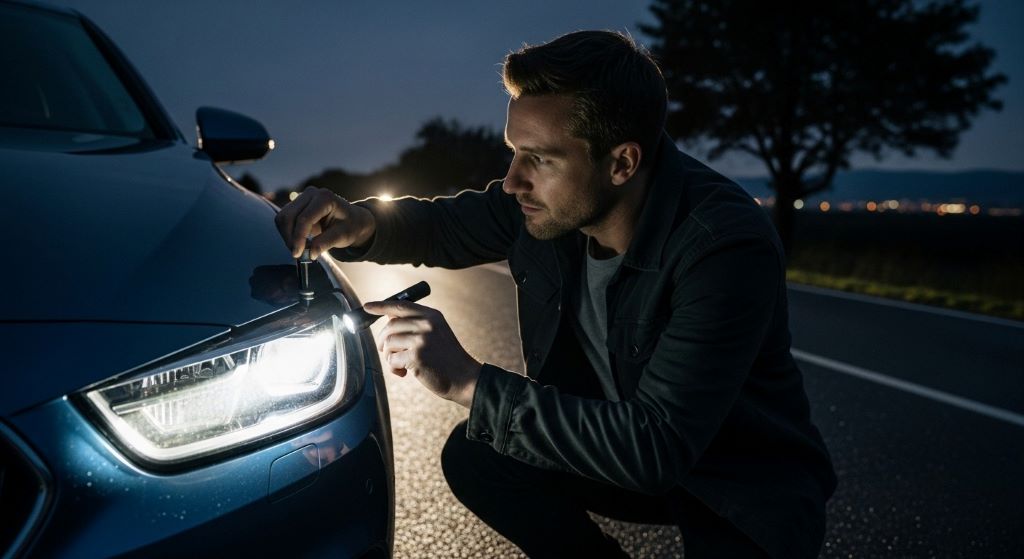
Your headlights serve as your primary tool for maintaining control during night driving. Consequently, keeping them in excellent condition is absolutely essential for your safety.
Start by inspecting your headlight lenses regularly. Cloudy or yellowed lenses reduce light output by up to 80 percent. You can restore them using a headlight restoration kit or have a professional handle the job. Clean lenses ensure maximum visibility on dark roads.
Furthermore, check your headlight aim at least twice yearly. Misaligned headlights point too high or too low, reducing your effective vision range. Most automotive shops can adjust your headlight aim in minutes. Proper alignment helps you spot hazards earlier and gives you more time to react.
Replace worn headlight bulbs before they burn out completely. Modern halogen bulbs lose brightness over time even when still functioning. Consider upgrading to LED or HID headlights if your vehicle supports them. These options provide brighter, whiter light that more closely resembles daylight.
Adjusting Your Driving Speed
Speed management becomes crucial when driving after dark. Your stopping distance must never exceed your visibility range. Simply put, you should always be able to stop within the illuminated area ahead of you.
Most headlights illuminate the road approximately 160 feet ahead at low beam and 350 feet at high beam. However, at 60 miles per hour, you travel 88 feet per second. This means you have less than two seconds to react to obstacles in your low beam range. Therefore, reducing your speed by 5 to 10 miles per hour gives you valuable extra reaction time.
Additionally, increase your following distance behind other vehicles. The standard three-second rule should become a four or five-second gap at night. This extra space provides more time to respond if the vehicle ahead brakes suddenly or encounters problems.
Managing Interior and Dashboard Lighting
Interior lighting affects your night vision more than most drivers realize. Bright dashboard displays and dome lights cause your pupils to contract, making it harder to see outside your vehicle.
Dim your dashboard lights to the lowest comfortable setting. Modern vehicles often have adjustable instrument panel brightness controls. Lower settings help your eyes maintain better adaptation to darkness outside. Your pupils will dilate more fully, improving your ability to detect objects in low light.
Keep your interior dome light off while driving. Use it only when parked or in emergencies. Even brief exposure to bright interior lights requires several minutes for your eyes to readjust to darkness. This temporary vision impairment can be dangerous on dark roads.
Maintaining Clean Windows and Mirrors
Dirty windows and mirrors scatter light from oncoming vehicles and street lamps. This scattered light creates glare that reduces visibility and causes eye strain. Therefore, keeping all glass surfaces spotless is essential for night driving safety.
Clean both the inside and outside of your windshield weekly. Interior surfaces accumulate oily film from dashboard materials and skin contact. This film becomes particularly noticeable at night when lights hit it at certain angles. Use a quality glass cleaner and microfiber cloth for streak-free results.
Don’t forget your side mirrors and rearview mirror. These surfaces collect dust and grime that intensify glare from following vehicles. Moreover, ensure your rearview mirror is in night mode if it has an anti-glare feature. This setting reduces brightness from headlights behind you without eliminating visibility.

Dealing With Oncoming Headlight Glare
Headlight glare from oncoming traffic ranks among the most common complaints from night drivers. This temporary blindness can last several seconds and significantly compromises your vehicle control.
When facing bright oncoming headlights, shift your gaze slightly to the right edge of your lane. Focus on the white line or road edge rather than looking directly at approaching vehicles. This technique helps you maintain lane position while protecting your vision from direct glare.
Use your sun visor if positioned correctly to block high-mounted headlights from trucks and SUVs. Some drivers find that quality polarized sunglasses designed for night driving reduce glare effectively. However, never wear regular dark sunglasses at night as they reduce overall visibility too much.
Combating Driver Fatigue
Fatigue impairs your judgment, slows reaction times, and reduces your ability to maintain proper vehicle control. Night driving naturally makes you more tired because your body expects to rest after dark.
Schedule regular breaks every two hours or 100 miles during long nighttime drives. Stop completely, exit your vehicle, and walk around for at least five minutes. Physical movement increases blood flow and alertness. Additionally, exposure to fresh air helps combat drowsiness.
Avoid heavy meals before night driving. Large amounts of food divert blood to your digestive system, making you sleepy. Instead, eat light snacks and stay hydrated with water. Caffeine can provide temporary alertness but avoid relying on it exclusively.
If you feel drowsy despite these measures, find a safe place to pull over immediately. A 20-minute nap can restore alertness more effectively than any other intervention. Never try to push through severe fatigue as it’s comparable to drunk driving in terms of impairment.
Using High Beams Appropriately
High beams dramatically improve visibility on dark roads without streetlights. They illuminate nearly twice the distance of low beams, giving you much more time to identify and respond to hazards.
Activate your high beams on rural roads and highways when no other traffic is nearby. The extended range helps you spot animals, pedestrians, and road debris much earlier. This advance warning is invaluable for maintaining control and avoiding accidents.
However, dim your high beams immediately when vehicles approach from either direction. Most states require dimming within 500 feet of oncoming traffic and 300 feet when following another vehicle. Failure to dim blinds other drivers and creates dangerous situations. Courtesy and safety go hand in hand with proper high beam usage.
Regular Vehicle Maintenance
Mechanical problems become more dangerous at night when visibility is already compromised. Consequently, maintaining your vehicle in top condition is essential for safe night driving.
Check your tire pressure and tread depth monthly. Underinflated or worn tires reduce traction and increase stopping distances. These problems become especially hazardous on dark roads where you may not see wet or slippery conditions until it’s too late.
Ensure all lights work properly, including brake lights, turn signals, and running lights. Other drivers need to see you clearly to avoid collisions. Replace burned-out bulbs immediately and carry spares for emergencies.
Keep your windshield washer fluid reservoir full. You’ll use it frequently to clear road grime and insects that accumulate on your windshield. Good visibility depends on having adequate cleaning fluid available throughout your journey.
Conclusion
Enhancing your automobile control during night driving requires a combination of proper preparation, vehicle maintenance, and smart driving techniques. By optimizing your lighting system, managing your speed, keeping windows clean, and staying alert, you significantly reduce your risk of nighttime accidents. Remember that reduced visibility demands extra caution and defensive driving practices. Implement these strategies consistently, and you’ll experience safer, more confident night driving regardless of conditions.
Frequently Asked Questions
What is the safest speed for night driving?
Drive 5 to 10 miles per hour slower than daytime speeds in the same conditions. Your speed should allow you to stop within your headlight range, which is typically 160 feet for low beams. Adjust further based on weather, road conditions, and traffic.
How can I reduce eye strain during long night drives?
Dim your dashboard lights, keep windows clean, use the night mode on your rearview mirror, and take regular breaks every two hours. Look away from oncoming headlights by focusing on the right edge of your lane. Consider anti-glare night driving glasses if strain persists.
When should I use high beams while driving at night?
Use high beams on dark roads without streetlights when no other vehicles are within 500 feet ahead or behind you. They provide twice the visibility of low beams, helping you spot hazards earlier. Always dim them for oncoming traffic and when following other vehicles.
How often should I clean my headlights?
Clean your headlight lenses during every car wash or at least monthly. Check for cloudiness or yellowing every few months, as this reduces light output significantly. Restore or replace clouded lenses immediately to maintain optimal visibility.
What should I do if I feel tired while driving at night?
Pull over at the nearest safe location immediately. Take a 20-minute nap, walk around outside, or switch drivers if possible. Never try to push through fatigue, as drowsy driving is as dangerous as drunk driving. If severely tired, find accommodation and rest properly.
Related Topics:
Luxury RVs Reviewed: Are They Worth the Price?
In-Depth Motorhome Reviews | Features, Pros & Cons