
Embarking on a van conversion journey is thrilling, yet every ounce matters when building a home on wheels. Weight-saving campervan cabinet materials are crucial for creating a functional, fuel-efficient, and durable camper van interior. Choosing the right materials ensures your van build remains lightweight without sacrificing strength or style. As someone who spent months transforming a Sprinter van into a cozy off-grid retreat, I learned that selecting materials like birch ply or aluminum can make or break your van’s performance. This article explores innovative materials and techniques to craft a campervan that’s both practical and lightweight, inspiring you to hit the road with confidence. Let’s dive into the world of weight-saving campervan cabinet materials and discover how to optimize your van build for adventure.
Why Weight Matters in Van Conversion Cabinetry
Weight is a critical factor in any van conversion. Heavy cabinets reduce fuel efficiency, strain suspension, and limit payload for essentials like water or solar panels. Lightweight materials, such as marine plywood or aluminum construction, enhance gas mileage and ease handling on mountain trail articulation. According to a 2023 study by RV Rank, reducing camper weight by 10% can improve fuel efficiency by up to 5%.
My own van build taught me this lesson the hard way. Initially, I used 3/4-inch plywood, only to realize it added unnecessary heft. Switching to 1/2-inch Baltic birch transformed my camper van furniture, making it easier to maneuver. Opting for weight-saving campervan cabinet materials not only saves fuel but also allows for more storage, like under bed cabinets, without compromising structural integrity.
Top Lightweight Materials for Campervan Cabinets
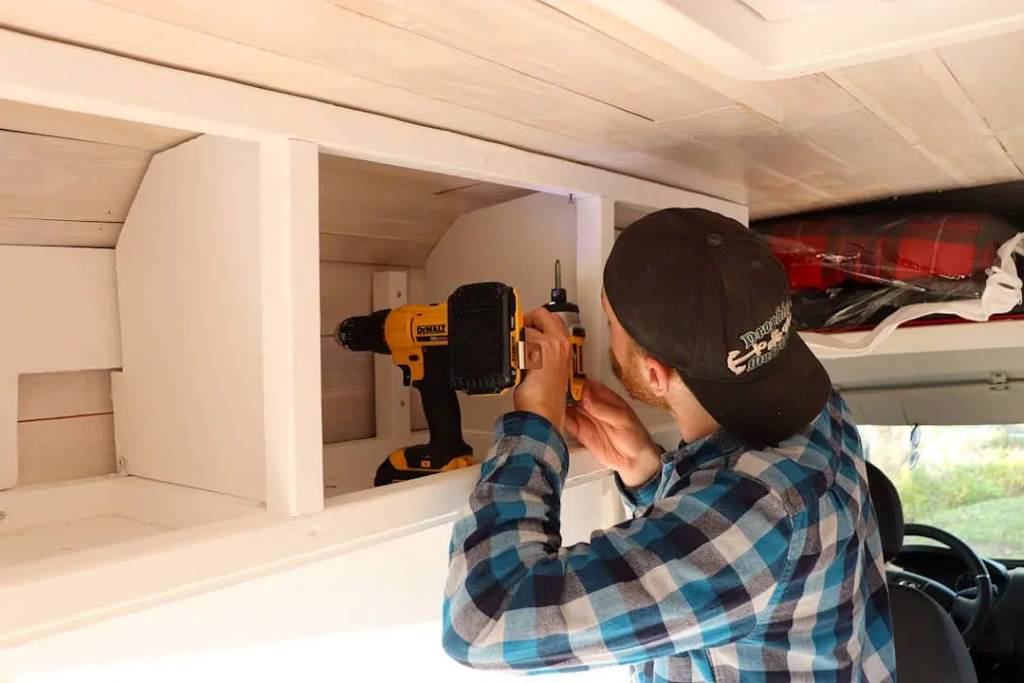
Selecting the right materials is key to a successful van build. Here are the most effective weight-saving campervan cabinet materials, each balancing durability and minimal weight.
- Birch Ply and Baltic Birch: Birch ply, especially Baltic birch, is a favorite for van conversions. Its multiple layers offer strength while keeping weight low. A 1/2-inch sheet weighs about 1.5 pounds per square foot, ideal for cabinet building.
- Marine Plywood: Designed for harsh environments, marine plywood resists moisture and weighs less than solid wood. It’s perfect for off-grid camper vans exposed to humidity.
- Aluminum Construction: Aluminum angle or frames provide unmatched strength-to-weight ratios. Companies like Van Wife use powder-coated aluminum for sleek, durable cabinets.
- Coosa Bluewater and Thermo-Lite Board: These composite materials are lighter than plywood and resist water, making them ideal for drawer boxes or cabinet bodies.
- Honeycomb Panels: These ultra-light panels, often used in aerospace, offer strength without bulk, though they’re pricier.
Each material has trade-offs. Baltic birch is affordable but requires sealing, while aluminum is durable but costly. Consider your budget and travel needs when choosing.
Innovative Construction Techniques for Weight Reduction
Beyond materials, construction methods play a huge role in weight savings. Techniques like skeleton framing and frame-oriented designs minimize material use while maintaining strength. For instance, removing unnecessary cabinet backs against van walls saves pounds, as noted in a Sprinter-Source forum discussion.
In my build, I used furring strips and pocket holes to create a skeleton frame, reducing the need for heavy plywood panels. This approach, paired with magnet closures instead of bulky latches, shaved off significant weight. Additionally, incorporating mesh nets for storage reduced the need for solid panels. These methods not only lighten the load but also enhance the camper van interior’s functionality, making it easier to access gear during full-time travel.
Balancing Aesthetics and Functionality in Campervan Furniture
Lightweight doesn’t mean sacrificing style. Weight-saving campervan cabinet materials can elevate your van’s look while keeping it practical. Baltic birch, with its smooth grain, pairs well with Nautolex Marine Vinyl Flooring for a polished aesthetic. Aluminum cabinets, like those from Flatline Van Company, offer a modern, sleek vibe.
I opted for unfinished birch ply, which I stained to match my van’s cozy vibe. Using a Kreg Cabinet Hinge Jig ensured precise door alignment, enhancing both form and function. However, avoid overloading cabinets with heavy items like lithium batteries or AGM batteries, as this negates weight savings. Instead, store such items in under bed cabinets to maintain balance and resale value.
Pros and Cons of Popular Weight-Saving Materials
To help you choose, here’s a breakdown of common materials:
- Baltic Birch:
- Pros: Lightweight, strong, affordable, easy to cut.
- Cons: Needs sealing to prevent moisture damage.
- Marine Plywood:
- Pros: Moisture-resistant, durable for off-grid use.
- Cons: Slightly heavier than Baltic birch.
- Aluminum Construction:
- Pros: Ultra-light, rust-proof, modern look.
- Cons: Expensive, requires specialized tools.
- Coosa Bluewater:
- Pros: Lightweight, water-resistant, strong.
- Cons: High cost, less common.
- Honeycomb Panels:
- Pros: Extremely light, high strength.
- Cons: Costly, limited availability.
Weigh these factors against your van build out goals. For example, Dark Star Offroad kits often use aluminum for its thermal stability, ideal for extreme climates.
Common Mistakes to Avoid in Cabinet Building
Building lightweight cabinets requires careful planning. Here are pitfalls to dodge:
- Using Thick Plywood: Avoid 3/4-inch plywood; 1/2-inch is sufficient for most builds.
- Ignoring Joint Strength: Weak joints, like poorly placed pocket holes, compromise durability.
- Overloading Cabinets: Heavy items negate weight savings, so plan storage wisely.
- Skipping Moisture Protection: Unsealed wood warps, especially in humid climates.
- Neglecting Hardware: Cheap cabinet hardware fails under road vibrations. Opt for marine-grade latches or Fast Cabinet Doors.
In my build, I initially overlooked sealing my birch ply, leading to slight swelling during a rainy trip. A quick application of polyurethane solved the issue, but it was a lesson learned. Proper planning ensures your cabinets withstand mountain trail articulation and long-term use.
Enhancing Resale Value with Lightweight Cabinets
Lightweight cabinets boost your van’s resale value by improving efficiency and appeal. Buyers value vans with thoughtful weight-saving designs, as they offer better fuel economy and payload capacity. For instance, using aluminum construction or Coosa Bluewater signals quality and durability, making your van stand out.
In my experience, showcasing my van’s lightweight Baltic birch cabinets during a sale attracted buyers who appreciated the fuel savings. Pairing these with modern touches like mesh nets and magnet closures added a premium feel. Investing in quality materials now pays off later, whether you’re upgrading or selling.
Building a Lighter, Smarter Campervan
Weight-saving campervan cabinet materials are the backbone of an efficient van conversion. From Baltic birch to aluminum construction, each option offers unique benefits to enhance your camper van interior. By combining smart materials with techniques like skeleton framing, you can craft a lightweight, durable, and stylish van build. My journey taught me that every pound saved translates to better adventures, from smoother drives to more room for solar panels or gear. Experiment with these materials and share your tips in the comments below—let’s inspire each other to create the ultimate off-grid camper vans!
FAQs
What are the best weight-saving campervan cabinet materials?
Baltic birch, marine plywood, aluminum, and Coosa Bluewater are top choices. They balance weight, strength, and durability for van conversions.
How can I reduce cabinet weight without losing strength?
Use skeleton framing, remove unnecessary backs, and opt for 1/2-inch plywood or honeycomb panels to maintain structural integrity.
Are aluminum cabinets worth the cost for van builds?
Yes, aluminum is lightweight, durable, and rust-proof, ideal for long-term travel, though it’s pricier than plywood.
How do I protect campervan cabinets from moisture?
Seal wood with polyurethane or varnish. Choose moisture-resistant materials like marine plywood or Coosa Bluewater for humid environments.
Can lightweight cabinets improve my van’s resale value?
Absolutely. Lightweight, durable cabinets enhance fuel efficiency and appeal, making your van more attractive to buyers.