
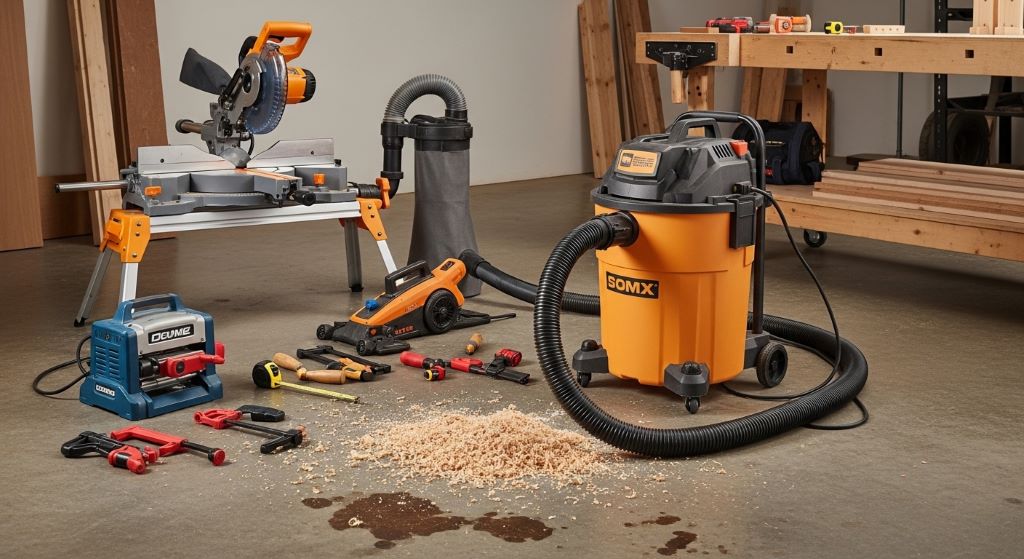
Your garage takes a beating. Sawdust, motor oil, gravel, pet hair, and fine debris pile up fast. A regular household vacuum simply cannot handle that kind of mess. Therefore, finding the right vacuum for your garage is one of the smartest investments you can make for keeping your space clean and functional.
This guide breaks down everything you need to know. From suction power to tank size, filtration to mobility — you will walk away knowing exactly what to look for before you buy.
Why a Regular Vacuum Is Not Enough for Your Garage
Most home vacuums are designed for carpets and hard floors. They handle light debris well. However, garages present a completely different challenge.
Think about what ends up on your garage floor. There is concrete dust, metal shavings, wood chips, spilled liquids, and sometimes even broken glass. A standard vacuum is not built for any of that. Its motor can burn out quickly. Its filters clog in minutes. Its hose may crack under the weight of heavier debris.
A vacuum made for garage use, on the other hand, is engineered to take on tough jobs. It has stronger suction, a larger tank, and more durable components. Additionally, many models are designed to handle both wet and dry messes, which makes them far more versatile.
What Makes a Garage Vacuum Different
Not every vacuum labeled “garage-ready” is actually up to the task. There are specific features that separate a capable machine from a disappointing one.
Suction Power and Motor Strength
This is the most important factor. A vacuum with a weak motor will struggle with fine dust and heavy debris alike. Look for models with at least 5 to 6 peak horsepower if you do regular workshop tasks. For light garage cleaning, 3 to 4 horsepower can be enough.
A powerful shop vac is the gold standard for garage environments. These machines are built around industrial-grade motors that maintain strong suction even as the tank fills up. That consistency is something budget models rarely offer.
Tank Capacity
Tank size matters more in a garage than almost anywhere else. Small tanks fill up quickly, and constant emptying breaks your workflow.
For occasional cleaning, a 5 to 8-gallon tank works fine. However, if you do woodworking, auto repair, or any kind of construction in your space, a 12 to 16-gallon tank will serve you much better. Some heavy-duty models go even larger.
Wet and Dry Capability
Garages are not just dusty — they are also prone to spills. Oil, water, and coolant can all end up on your floor. A vacuum that handles only dry debris leaves you unprepared.
Therefore, look for a wet/dry vacuum. These models can safely pick up liquids without damaging the motor. Most come with a float mechanism that automatically shuts off suction when the tank is full of liquid, which protects both the machine and the user.
Filtration System
Filtration is easy to overlook, but it plays a major role in air quality. Garages often contain fine particles from cutting, sanding, or grinding. If those particles pass through the vacuum and back into the air, you are not really cleaning — you are just moving the problem.
Look for vacuums with a HEPA filter or at least a high-efficiency cartridge filter. These trap fine particles and keep the air in your garage cleaner. Some models also include a foam sleeve for wet pickup, which prevents filter damage from liquids.
Types of Garage Vacuums to Consider
There is no single right answer when it comes to vacuum type. Your choice should match how you use your garage.
Canister Shop Vacuums
These are the most common choice for garage use. They sit on wheels, have a large tank, and come with a range of attachments. Most are versatile enough to handle sawdust, nails, gravel, and standing water.
The downside is size. A large canister vac takes up floor space and can be awkward to move around tight areas. However, for most garages, the trade-off is worth it.
Wall-Mounted Vacuums
If floor space is limited, a wall-mounted option is a smart alternative. These units attach directly to your garage wall and keep the floor clear. They are especially popular in smaller garages or workshops.
The suction is typically strong, and the hose length is usually generous enough to reach every corner of a standard two-car garage. Additionally, some models come with built-in storage for attachments, which keeps everything organized.
Cordless Garage Vacuums
Cordless models have improved dramatically in recent years. They offer freedom of movement without needing an outlet nearby. For quick cleanups, they are hard to beat.
However, battery life is still a limitation. Most cordless garage vacuums run for 20 to 40 minutes on a charge. For quick sessions, that is plenty. For longer jobs, a corded model is still the better choice.
Central Vacuum Systems
For those who do heavy work in their garage regularly, a central vacuum system is worth considering. These are permanently installed and connect to inlets throughout the space. They offer exceptional suction and quiet operation since the motor is housed away from the work area.
The installation cost is higher, but the convenience and performance often justify it for serious hobbyists and professionals.
Key Features to Compare Before You Buy
Once you have narrowed down your type, compare these specific features across models.
Hose length and flexibility matter a great deal. A short or stiff hose makes it hard to reach under workbenches and into corners. Look for at least 7 to 10 feet of hose, and check whether it is crush-resistant.
Attachment variety is another consideration. A good garage vacuum should include a crevice tool, a wide floor nozzle, and a brush attachment at minimum. Some kits also include car cleaning attachments, which extend the usefulness of the machine.
Noise level is worth checking if you work in a shared space or near a living area. Industrial vacuums can be loud. Many manufacturers publish decibel ratings, so compare those figures before deciding.
Cord length affects how much area you can cover without moving to a new outlet. A 20-foot or longer cord is ideal for a standard-sized garage.
Durability and build quality should not be ignored. Plastic canisters are lighter but more prone to cracking. Metal or reinforced plastic models last longer and handle rough treatment better.
Garage Dust Removal: Getting the Most Out of Your Vacuum
Owning the right vacuum is only part of the solution. How you use it matters just as much.
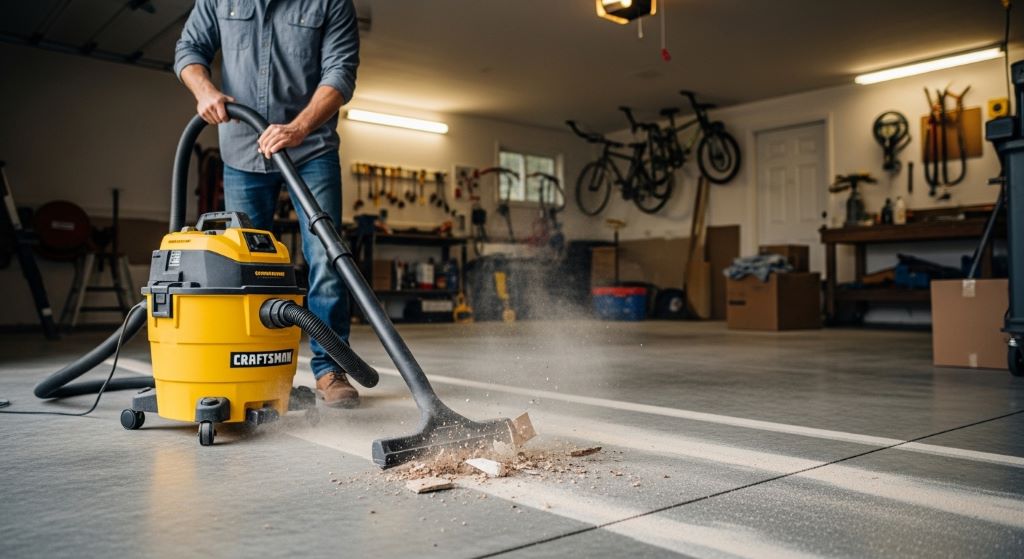
Effective garage dust removal starts with regular cleaning habits. Do not wait until the floor is buried in debris. A quick five-minute sweep after each project keeps buildup under control and makes the big cleanups much easier.
Use the right attachment for each task. The crevice tool reaches tight spots. The wide nozzle covers open floor space quickly. The brush attachment works best on shelving and workbenches where debris clings to surfaces.
Additionally, clean or replace your filters regularly. A clogged filter dramatically reduces suction. Most manufacturers recommend cleaning reusable filters after every few uses and replacing them once a year depending on how heavily the vacuum is used.
Empty the tank before it gets completely full. Waiting until the last moment reduces suction and puts extra strain on the motor. A half-full tank is the practical limit for maintaining strong performance.
Common Mistakes to Avoid When Buying a Garage Vacuum
Many buyers focus on price alone and end up disappointed. A cheap vacuum with poor filtration or a weak motor will frustrate you from day one.
Another common mistake is ignoring tank size. Buying a small tank to save money often means spending more time emptying it than actually cleaning.
Skipping the wet/dry feature is also a mistake many regret. Spills happen. Having a vacuum that can handle both wet and dry messes saves you from needing a second machine.
Finally, do not overlook accessories. A vacuum with a great motor but limited attachments will still leave certain areas of your garage hard to reach. Check what comes in the box before committing to a purchase.
Conclusion
Finding the best vacuum for your garage in 2026 comes down to matching the right features to your specific needs. Start by thinking about how you use your garage and what kinds of debris you deal with most often.
Prioritize suction strength, tank capacity, and filtration quality above all else. A powerful shop vac with wet/dry capability and a solid filter system will handle almost anything your garage throws at it. Consider your space, your workflow, and your budget — then choose accordingly.
Whether you do light maintenance or heavy-duty projects, effective garage dust removal makes your workspace safer, cleaner, and more enjoyable. The right vacuum will pay for itself in time saved and frustration avoided.
Frequently Asked Questions
What size vacuum is best for a two-car garage?
A 12 to 16-gallon wet/dry vacuum is ideal for a two-car garage. It offers enough capacity for extended cleaning sessions without constant emptying, and the tank is large enough to handle major spills or debris buildup.
Can I use a shop vac to clean up drywall dust?
Yes, but you need the right filter. Standard filters can clog quickly with fine drywall dust. Use a fine dust or HEPA-rated filter to capture those particles without damaging the motor or releasing dust back into the air.
How often should I clean or replace my garage vacuum filter?
For regular use, clean reusable filters every two to three uses. Replace cartridge or HEPA filters at least once a year, or more frequently if you do heavy sanding, grinding, or cutting in your workspace.
Are cordless garage vacuums powerful enough for serious cleaning?
Cordless models work well for light to moderate garage cleaning. However, for heavy debris, large spaces, or extended sessions, a corded model with a larger motor and tank will outperform most battery-powered options.
What is the difference between peak horsepower and continuous horsepower?
Peak horsepower refers to the maximum power a motor can briefly reach during startup. Continuous horsepower reflects the sustained power during normal operation. For garage vacuums, continuous horsepower is a more useful indicator of real-world cleaning performance.
Related Topics:
How to Paint a Car with a Paint Sprayer on a Budget (Step-by-Step Guide)
How to Fix Low Pressure Issues in a Motorhome Water Pump Without Replacing It