

For modern RVers and vanlifers, energy independence is no longer a luxury—it’s essential. As 2025 ushers in more innovation in renewable energy, portable solar panels have become smarter, lighter, and more powerful. If you’re seeking the best portable solar panels for motorhomes in 2025, you’re in the right place.
Let’s explore the top-performing models, key features to look for, and real insights to help you stay powered up off-grid.
Why Portable Solar Panels Are a Must-Have for Motorhome Owners
In 2024 alone, over 65% of RV owners in North America used solar power during their trips, according to a KOA report. The shift isn’t just about sustainability—it’s also about cutting costs and avoiding the hassle of campsite hook-ups.
Unlike fixed rooftop panels, portable solar kits give users flexibility. They allow you to park in the shade while placing your panels in full sun. This freedom enhances efficiency and comfort during your travels.
Motorhome enthusiasts want quick setups, reliable charging, and low maintenance. Today’s leading solar brands deliver on all fronts.
Key Features That Define the Best in 2025
Advancements in solar tech have changed the game. Here’s what sets the best portable solar panels apart in 2025:
- High Wattage Output: Most portable units now range from 200W to 400W.
- Monocrystalline Cells: These offer up to 23% efficiency, outperforming polycrystalline alternatives.
- Integrated MPPT Controllers: These maximize charging rates and improve compatibility with various battery types.
- Durable and Weather-Resistant Builds: IP65-rated panels ensure reliability during unpredictable outdoor conditions.
- Lightweight and Foldable Designs: Many models now weigh under 20 pounds and fold into compact carry cases.
Let’s dive into some top contenders.
Top Picks: Best Portable Solar Panels for Motorhomes in 2025
-
Jackery SolarSaga 200W Pro
Jackery remains a trusted name in mobile solar power. The 2025 SolarSaga 200W Pro model brings high efficiency, portability, and smart connectivity. Weighing just under 18 lbs, it folds easily and comes with adjustable kickstands.
Its high-efficiency monocrystalline cells push output above 23%. Paired with Jackery’s Explorer 2000 Plus, users can power fridges, laptops, and even coffee makers for hours. TechRadar gave this model a 4.8-star review in January 2025 for its reliability and build quality.
Pros:
- Excellent output for its size
- Durable and water-resistant
- Plug-and-play setup
Cons:
- Premium price
- Works best with Jackery power stations
-
Bluetti PV350
Bluetti’s PV350 is a beast for power-hungry RVers. At 350 watts, it can fully charge a Bluetti AC200P within 5–6 hours of good sunlight. It’s heavier (30 lbs) but worth it for long off-grid stays.
It folds into a briefcase-style carrier, ideal for storage. Reviewers from Tom’s Guide highlight its rugged build and wide compatibility, thanks to universal MC4 connectors.
Pros:
- High wattage
- Works with many battery systems
- Great for extended trips
Cons:
- Heavier than most
- Requires more space to deploy
-
EcoFlow 220W Bifacial Solar Panel
EcoFlow pushes boundaries with bifacial solar technology. This 220W panel can absorb sunlight from both sides, boosting output by up to 25% in reflective environments like snow or sand.
The panel’s compact, waterproof design and integrated case make it a smart choice for digital nomads. It’s especially popular among users who boondock in variable terrains.
Pros:
- Dual-surface power generation
- Sleek and compact
- High weather resistance
Cons:
- Needs optimal setup to benefit from bifacial tech
- Higher cost than single-surface models
How to Choose the Right Solar Panel for Your Motorhome
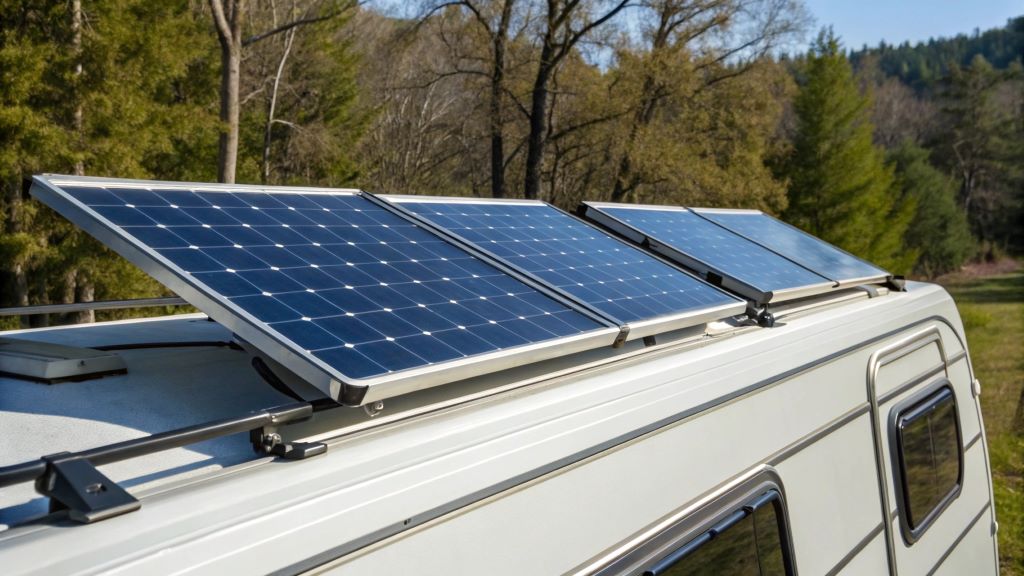
Every motorhome setup is different, so consider your energy needs. Full-time RVers with large power demands should opt for panels with 300W+ output. If you camp occasionally and run basic electronics, a 100W–200W system might suffice.
Battery compatibility is another critical factor. Some panels are plug-and-play with lithium batteries, while others need external controllers or inverters. Ensure your chosen panel matches your power station.
Portability also matters. If you frequently change locations, prioritize lighter models that fold compactly. On the other hand, if you’re stationary for days, heavier panels with higher output will serve better.
Real Users, Real Feedback
Online reviews from seasoned RVers provide valuable insights. Reddit’s r/vandwellers community often praises the Jackery 200W for its balance of weight and efficiency. Meanwhile, Bluetti’s PV350 is a favorite among off-grid digital workers who require uninterrupted power.
Forums like RV.net and Escapees Club highlight the importance of quality cables and solid kickstands. Faulty accessories often lead to energy loss or inefficient angles.
User “NomadicJane” on RVillage shared how switching from a 100W budget panel to an EcoFlow 220W doubled her daily energy harvest—allowing her to work full days without draining her battery.
Cost vs. Value: Are Expensive Panels Worth It?
High-end solar kits range from $500 to $1,200 in 2025. Budget models start at $150, but often lack efficiency, durability, and warranty support.
Premium options like EcoFlow and Jackery justify their prices with smart MPPTs, efficient cells, and 3-year warranties. Cheap panels may work initially but degrade faster. Therefore, if you’re a regular traveler, investing in a durable panel ensures long-term savings and fewer headaches.
According to a report by Solar Power World, premium solar setups can pay for themselves within two years of regular use, thanks to reduced fuel and campground fees.
Frequently Asked Questions (FAQs)
- Can I use portable solar panels with any RV battery?
Most panels work with AGM, lithium, or lead-acid batteries. Check for MPPT controllers for safer charging. - Are portable solar panels waterproof?
Many top models are IP65 rated, meaning they resist dust and water jets. Avoid submerging them, though. - How long do portable solar panels last?
Quality panels last 10–15 years. Look for models with at least a 2- to 5-year warranty. - How many watts do I need for full-time RV living?
Aim for 300–600 watts if you power laptops, fridges, and lights daily. - Can I use solar panels without a generator?
Yes, but only if your panels and batteries can handle your full load. - What’s the benefit of bifacial panels?
They capture extra ambient light, boosting overall efficiency by up to 25%. - Are foldable solar panels as good as rigid ones?
Modern foldables rival rigid panels in output but offer easier storage and portability.
Final Thoughts
Choosing the best portable solar panels for motorhomes in 2025 means looking beyond specs. Think about how you travel, where you camp, and what devices you rely on. A good panel should fit your lifestyle as much as your roof rack.
From the bifacial innovation of EcoFlow to the raw power of Bluetti, today’s top brands offer solutions for every kind of adventurer. For consistent energy on the road, trusted performance, and the freedom to roam, these solar panels are more than gear—they’re your passport to off-grid living.
Read More: