Planning longer motorhome trips becomes easier when your fresh food stays safe, tasty, and ready to enjoy. Many travelers struggle with limited storage space and changing temperatures, yet smart preparation makes a noticeable difference. According to the United States Department of Agriculture, refrigerated foods should stay at or below 40°F for food safety. Additionally, food waste remains a major concern across the USA, making proper storage methods valuable for every motorhome owner. This guide explains practical techniques that help fresh food last more than seven days while reducing waste and saving money.
Plan Your Food Storage Before Leaving
Successful food storage begins before your motorhome leaves the driveway. Create a realistic meal plan that matches your travel schedule and available refrigerator capacity.
Next, inspect your refrigerator seals, cooling system, and storage bins for proper operation. While preparing your vehicle, review these keep mice out motorhome tips because pests can quickly ruin stored food.
Purchase only the amount of fresh food you expect to eat within your planned itinerary. Consequently, your refrigerator stays organized while cold air circulates more efficiently.
Create a Smart Shopping List
- Prioritize vegetables with longer shelf lives.
- Select firm fruits instead of overly ripe varieties.
- Choose vacuum sealed meats whenever possible.
- Buy smaller dairy containers to reduce repeated exposure.
- Pack versatile ingredients for multiple meals.
Choose Fresh Foods That Naturally Last Longer
Some fresh foods remain in excellent condition much longer than others. Therefore, selecting durable ingredients helps reduce spoilage throughout your journey.
Hard vegetables tolerate travel much better than delicate leafy greens. Likewise, apples, oranges, lemons, and grapes usually remain fresh longer than berries or peaches.
When organizing your travel essentials, review these RV insurance and registration tips before beginning longer road trips across the USA.
Best Vegetables for Extended Storage
- Carrots
- Cabbage
- Broccoli
- Bell peppers
- Celery
- Cauliflower
Best Fruits for Longer Trips
- Apples
- Oranges
- Grapes
- Pears
- Lemons
Organize Your Motorhome Refrigerator Properly
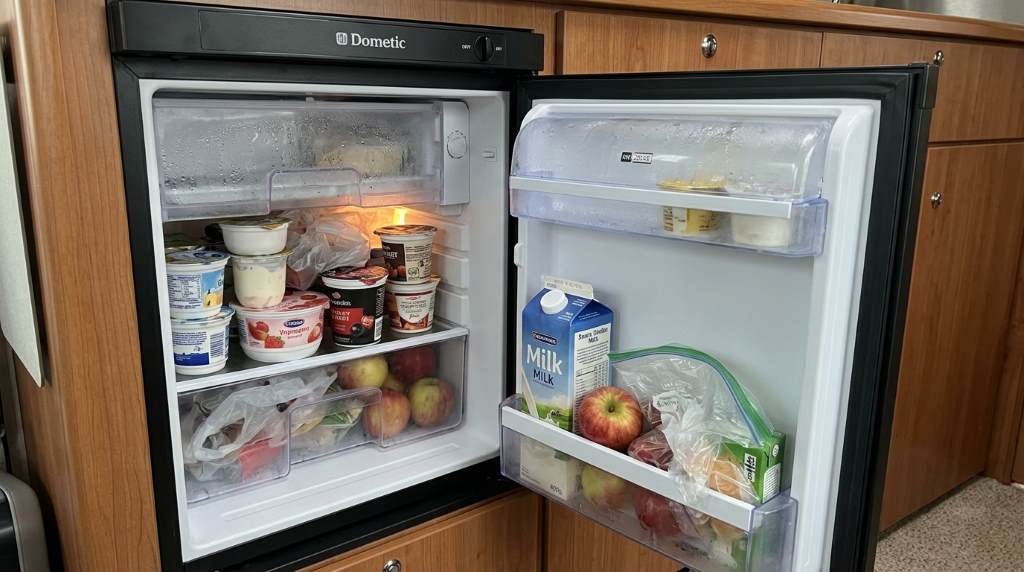
Proper organization allows cold air to circulate evenly throughout your refrigerator. As a result, every shelf maintains a more consistent temperature.
Store raw meat on the lowest shelf inside leakproof containers to prevent contamination. Furthermore, place ready to eat foods above raw ingredients for better food safety.
Limited storage often creates unnecessary clutter inside compact refrigerators. Fortunately, these space saving living hacks help maximize every available inch without sacrificing accessibility.
Recommended Refrigerator Layout
- Top shelf for cooked meals and leftovers.
- Middle shelf for dairy products.
- Bottom shelf for raw meat.
- Door compartments for sauces and drinks.
- Drawers for vegetables and fruits.
Control Temperature Throughout Your Journey
Your refrigerator works harder during hot weather and frequent door openings. Therefore, monitoring internal temperatures becomes an everyday habit.
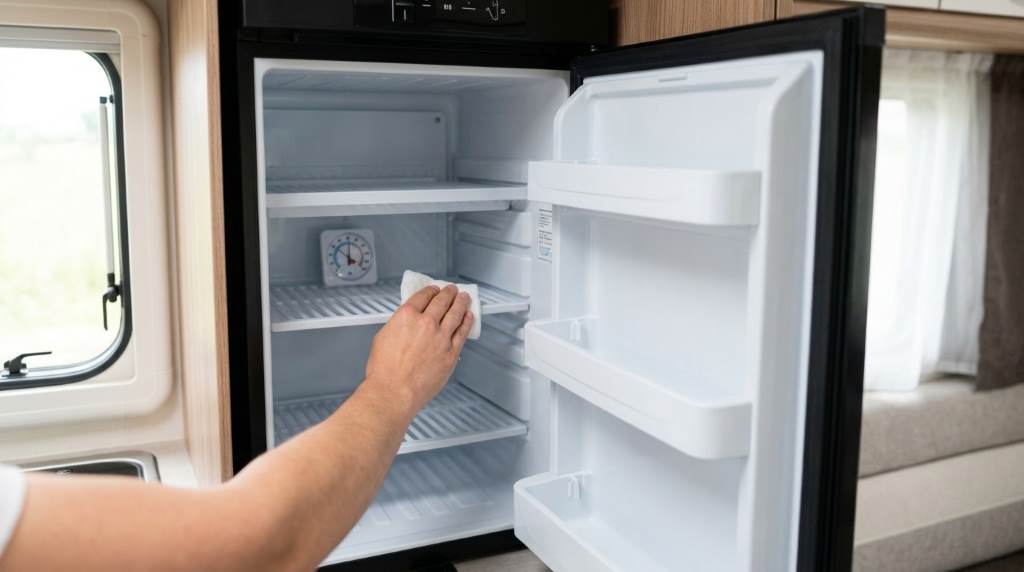
Place an inexpensive refrigerator thermometer inside the main compartment for accurate readings. Additionally, avoid leaving the refrigerator door open while deciding what to cook.
Park in shaded areas whenever possible because direct sunlight increases refrigerator workload. Consequently, your cooling system maintains stable temperatures more efficiently.
Use Quality Storage Containers
Strong airtight containers protect food from moisture, odors, and accidental spills. Besides improving freshness, they also simplify refrigerator organization.
Glass containers resist staining and preserve flavors well, although they weigh more. Meanwhile, BPA free plastic containers offer lightweight convenience for frequent travelers.
Vacuum sealed bags remove excess air around meat, vegetables, and prepared meals. As a result, many foods stay fresh noticeably longer.
Prepare Food Before You Leave
Prepping ingredients at home saves valuable time during busy travel days. Moreover, smaller portions reduce repeated handling inside the refrigerator.
Wash sturdy vegetables before departure, then dry them completely with clean towels. Excess moisture encourages spoilage even inside properly cooled refrigerators.
Marinate meat before packing because preparation becomes easier at campsites. Likewise, portion family meals into individual containers for quick access.
Manage Moisture Carefully
Moisture control plays a significant role in extending food freshness. Therefore, every container should remain clean and dry before use.
Wrap leafy vegetables with paper towels to absorb extra moisture during storage. Consequently, lettuce and spinach often stay crisp longer.
Replace damp paper towels whenever necessary because trapped moisture encourages faster deterioration. Small maintenance steps produce consistently better storage results.
Freeze Food Strategically
Freezing selected foods creates additional flexibility during longer motorhome adventures. However, avoid freezing ingredients that lose texture after thawing.
Freeze meats, bread, soups, and prepared meals before departure whenever possible. Then, move frozen items into the refrigerator as needed during the week.
This gradual thawing method keeps food cold while creating additional cooling support inside the refrigerator. Therefore, overall food quality remains higher.
Avoid Cross Contamination
Food safety always deserves attention during extended road trips. Clean hands and sanitized surfaces reduce contamination risks significantly.
Keep raw meat completely separated from vegetables, dairy products, and cooked meals. Furthermore, use different cutting boards whenever preparing fresh ingredients.
Sanitize countertops regularly because compact kitchens accumulate bacteria more quickly. Consistent cleaning protects everyone traveling inside the motorhome.
Monitor Food Every Day
Daily inspections prevent small issues from becoming expensive food waste. Therefore, spend a few minutes checking stored ingredients every morning.
Cook foods approaching their freshness limits before opening newer supplies. Consequently, you minimize waste while enjoying better tasting meals.
Remove spoiled food immediately because unpleasant odors spread rapidly inside small refrigerators. Clean affected shelves before returning other items.
Common Mistakes to Avoid
- Overloading the refrigerator.
- Ignoring refrigerator temperature.
- Leaving food uncovered.
- Storing wet vegetables immediately.
- Opening the refrigerator too frequently.
- Keeping expired foods during long trips.
Conclusion
Learning how to store fresh food in a motorhome for 7+ days helps you travel with greater confidence and lower grocery costs. Smart planning, proper refrigeration, careful organization, and daily food checks all contribute to longer lasting freshness. Every small improvement creates a safer and more enjoyable cooking experience while exploring destinations across the USA. Start applying these practical storage habits before your next adventure and enjoy fresh meals throughout your entire journey.
Frequently Asked Questions
How cold should a motorhome refrigerator stay?
Keep the refrigerator at or below 40°F for safe food storage.
Can fresh vegetables last more than one week in a motorhome?
Yes, many sturdy vegetables remain fresh beyond seven days with proper storage.
Should meat stay on the bottom shelf?
Yes, storing raw meat on the lowest shelf helps prevent cross contamination.
Are airtight containers worth using?
Yes, airtight containers improve freshness while reducing odors and moisture exposure.
How often should I check stored food?
Inspect your fresh food every day to identify spoilage before it spreads.